Dreaming Trans: A Collaborative Zine

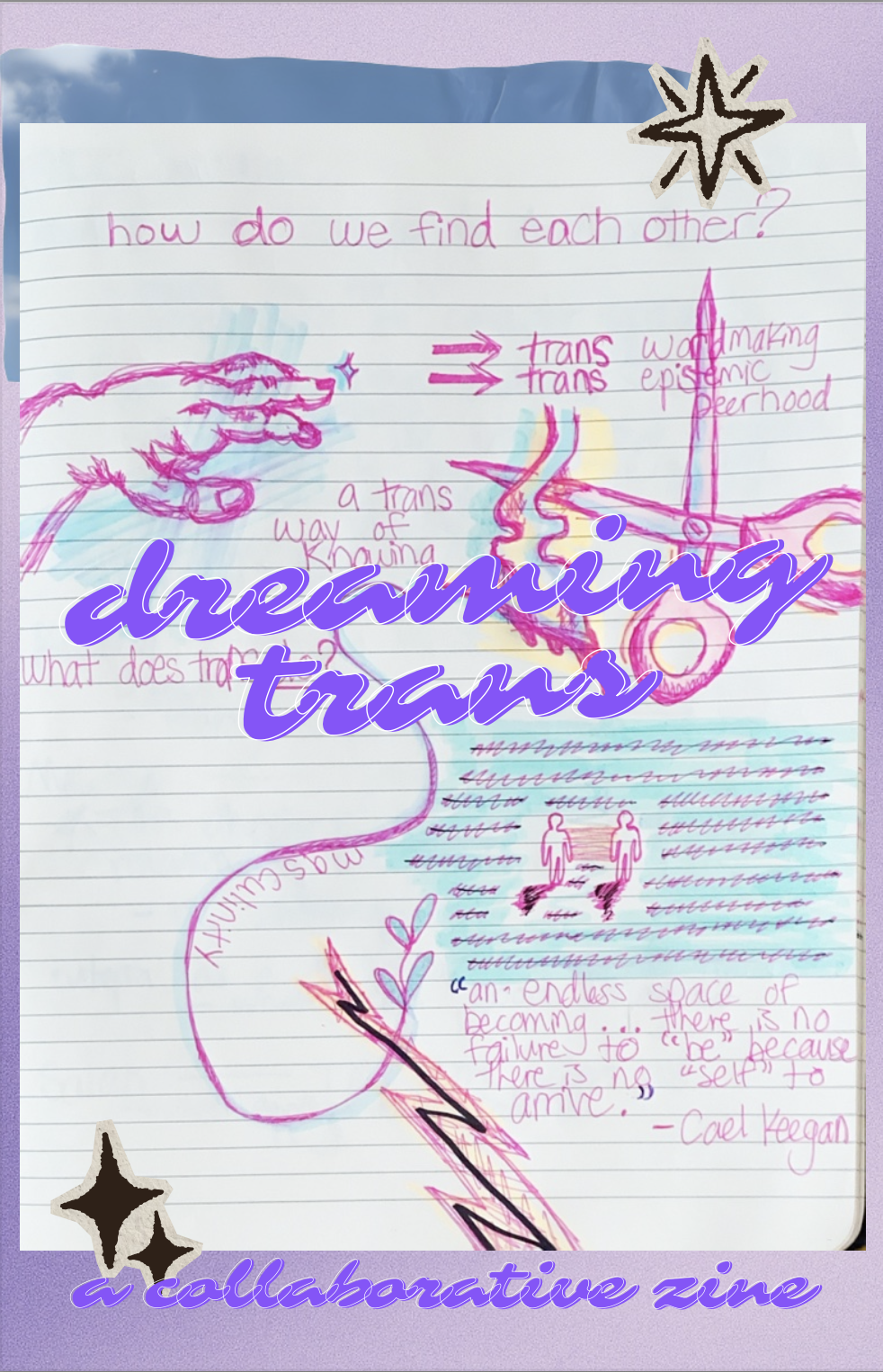
How do we find each other?
This question guided Dreaming Trans: Method, Sex, and the Unconscious, a three-part seminar series I convened at McGill University in winter 2026 as Muriel Gold Visiting Scholar. It also guided the collaborative zine that emerged from our time together.
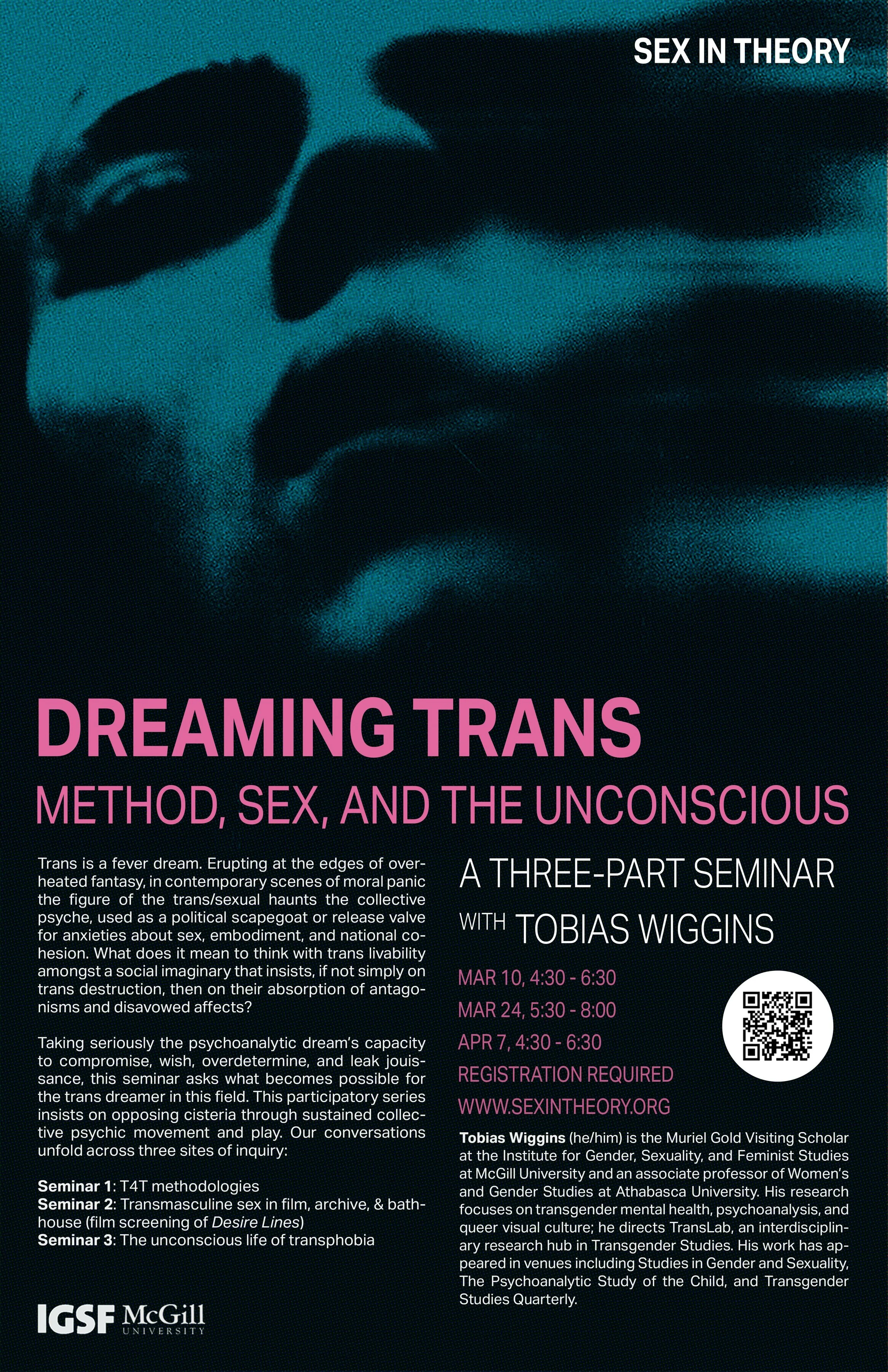
During Montréal’s long, cold winter months, students, artists, activists, scholars, and community members gathered in a small seminar room on campus. Most participants were transgender, nonbinary, or gender-nonconforming. We came together to think through trans epistemologies, sexuality and desire, psychoanalysis, and the contemporary life of anti-trans panics.
These conversations unfolded within a social landscape in which the figure of the trans//sexual continues to haunt the collective psyche, serving as a political scapegoat and repository for anxieties surrounding sex and the imagined cohesion of the nation-state. I wanted the series to create room for a different kind of inquiry: one that could think with trans livability within a social imaginary that insists, if not on trans destruction, then on making trans people bear its antagonisms and disavowed affects.
Across the seminars, we asked what might become possible for the trans dreamer if we take seriously the psychoanalytic dream’s capacities to compromise, wish, overdetermine, and leak jouissance. We also considered what it means to “think trans” together: not simply as an object of study, but as a collective practice of psychic movement, play, and opposition to ciscentrism.
The need for this space became clear almost immediately. Registration filled within twenty-four hours of the seminar’s circulation through student networks. Participants shared a longing for T4T intellectual spaces, while those outside the university emphasized the importance of free and accessible pathways into trans scholarship. This response confirmed something I have encountered repeatedly in my work: trans people are not only seeking recognition within existing institutions, but spaces in which we can generate theory, method, and relation on our own terms.
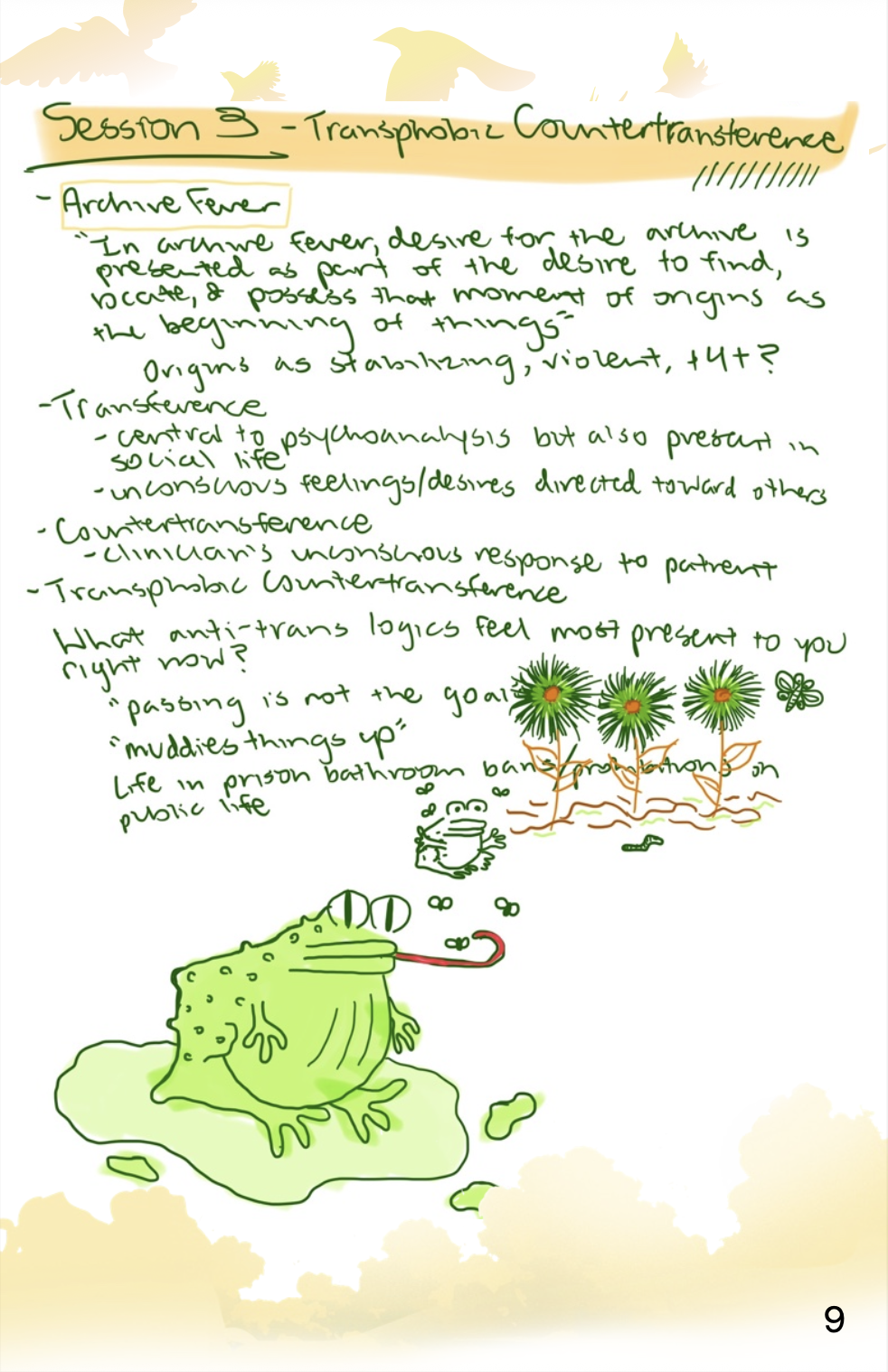
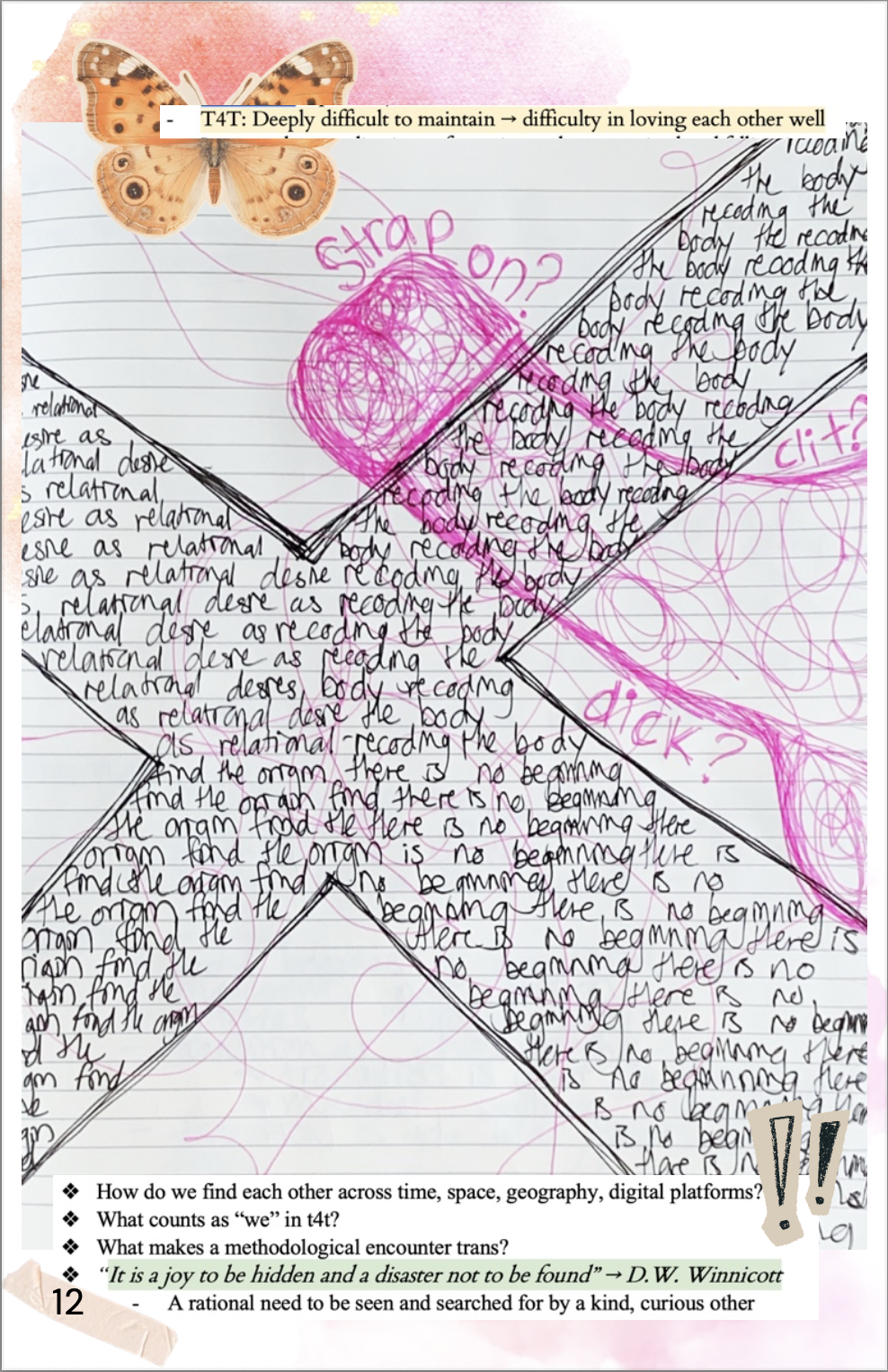
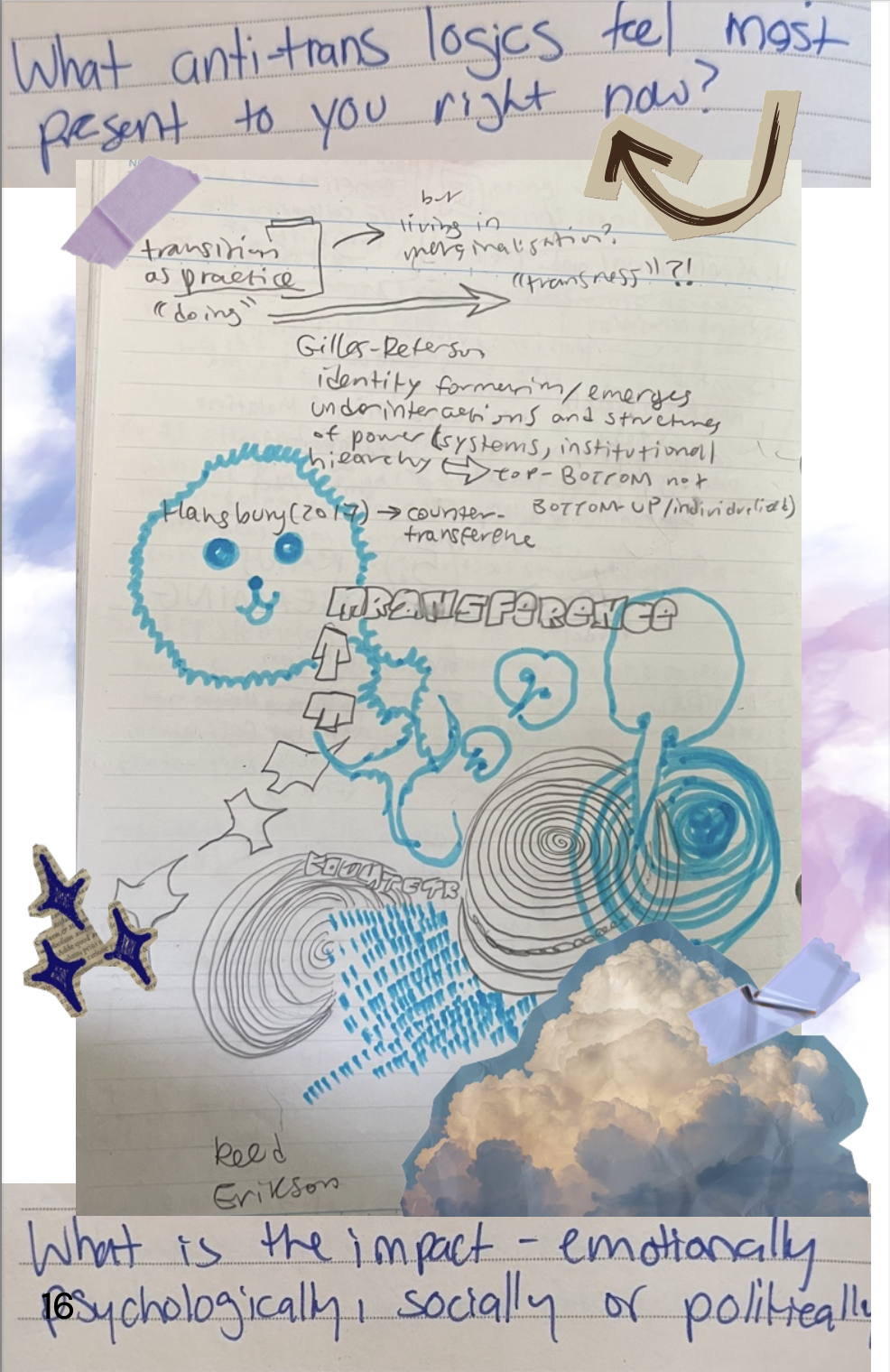
The three seminars moved across distinct but connected sites of inquiry. We began with T4T methodologies, considering what trans-specific approaches to research might make possible. The second seminar examined transmasculine sexuality across film, the archive, and the bathhouse through a screening and discussion of the hybrid film Desire Lines (2024). The final seminar turned to the unconscious life of transphobia through an examination of transphobic countertransference.
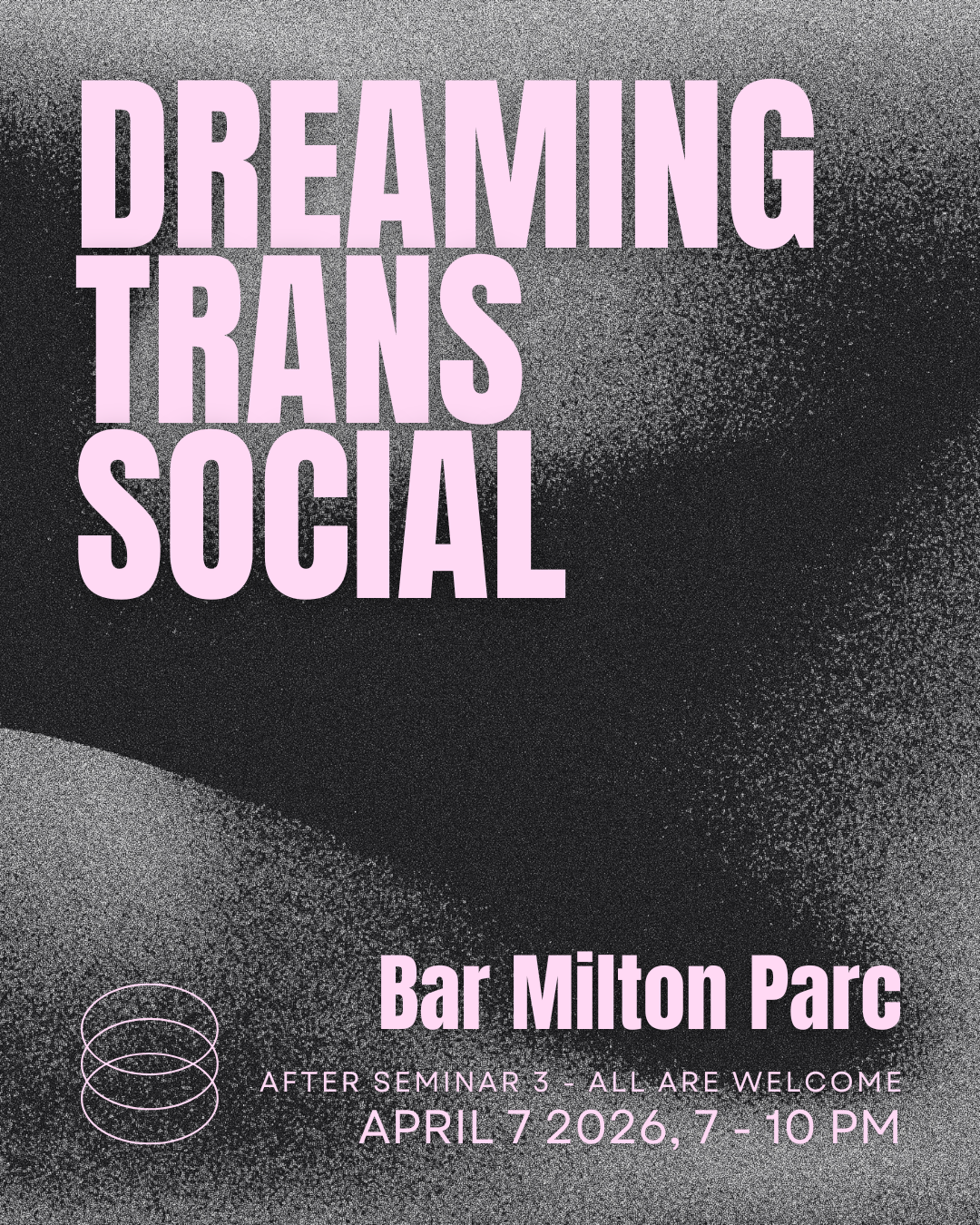
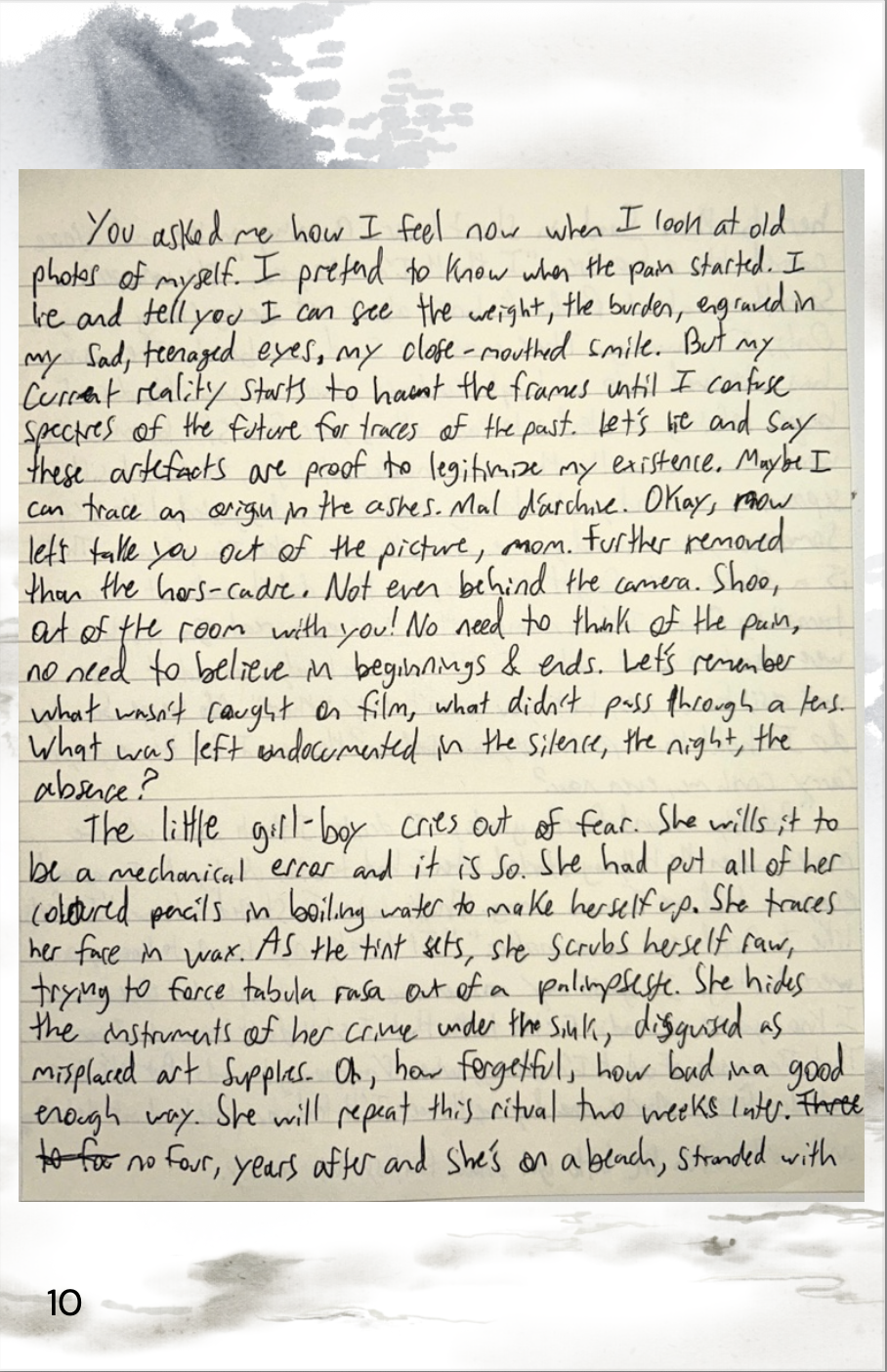
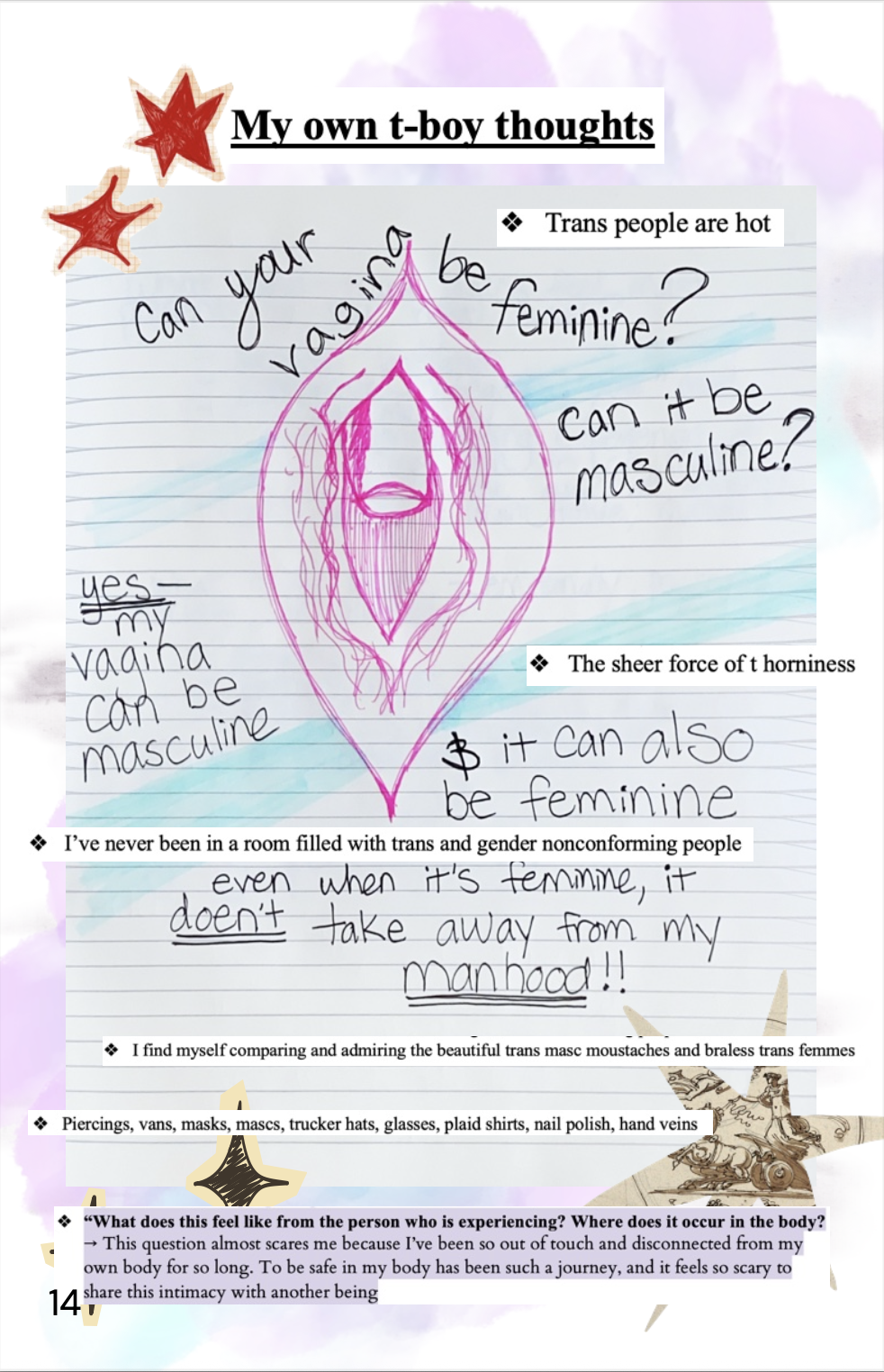
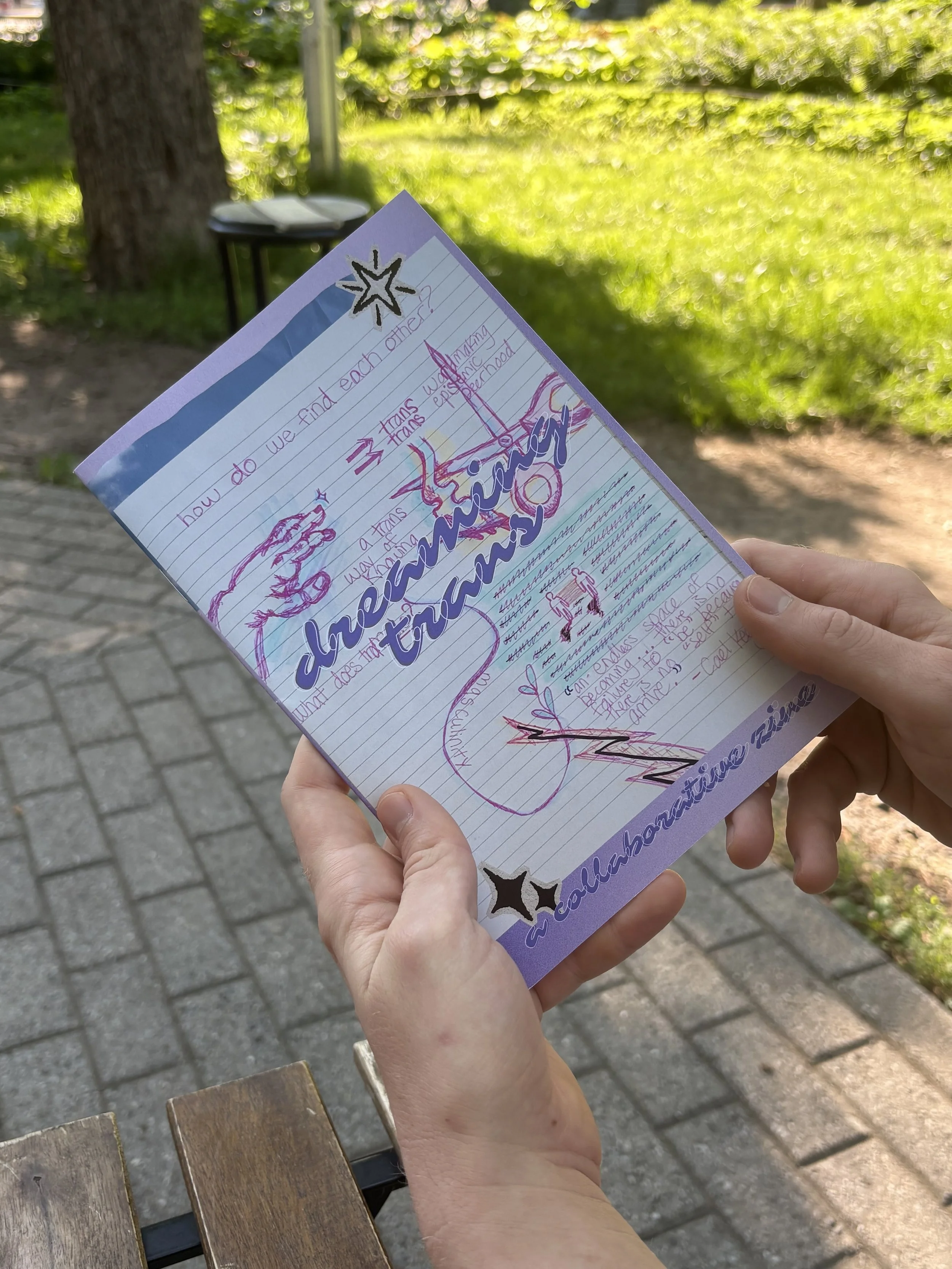
From the beginning, the students and I wanted to find a way for the seminar’s insights to travel beyond the room. Participants were invited to save their notes, draw, and imagine what contribution they might make to a self-published record. Student assistant Gabriel then assembled the resulting drawings, notes, stories, reflections, quotations, erotic and experimental images, and T4T ramblings into a colourful, collage-forward zine.
The closing evening included a reception at Bar Milton-Parc, a queer-focused, worker-owned co-operative. It offered a moment of celebration and reprieve: a chance to riff on what we had learned, laugh together, and share fresh food in a way that brought a much-needed sense of abundance.
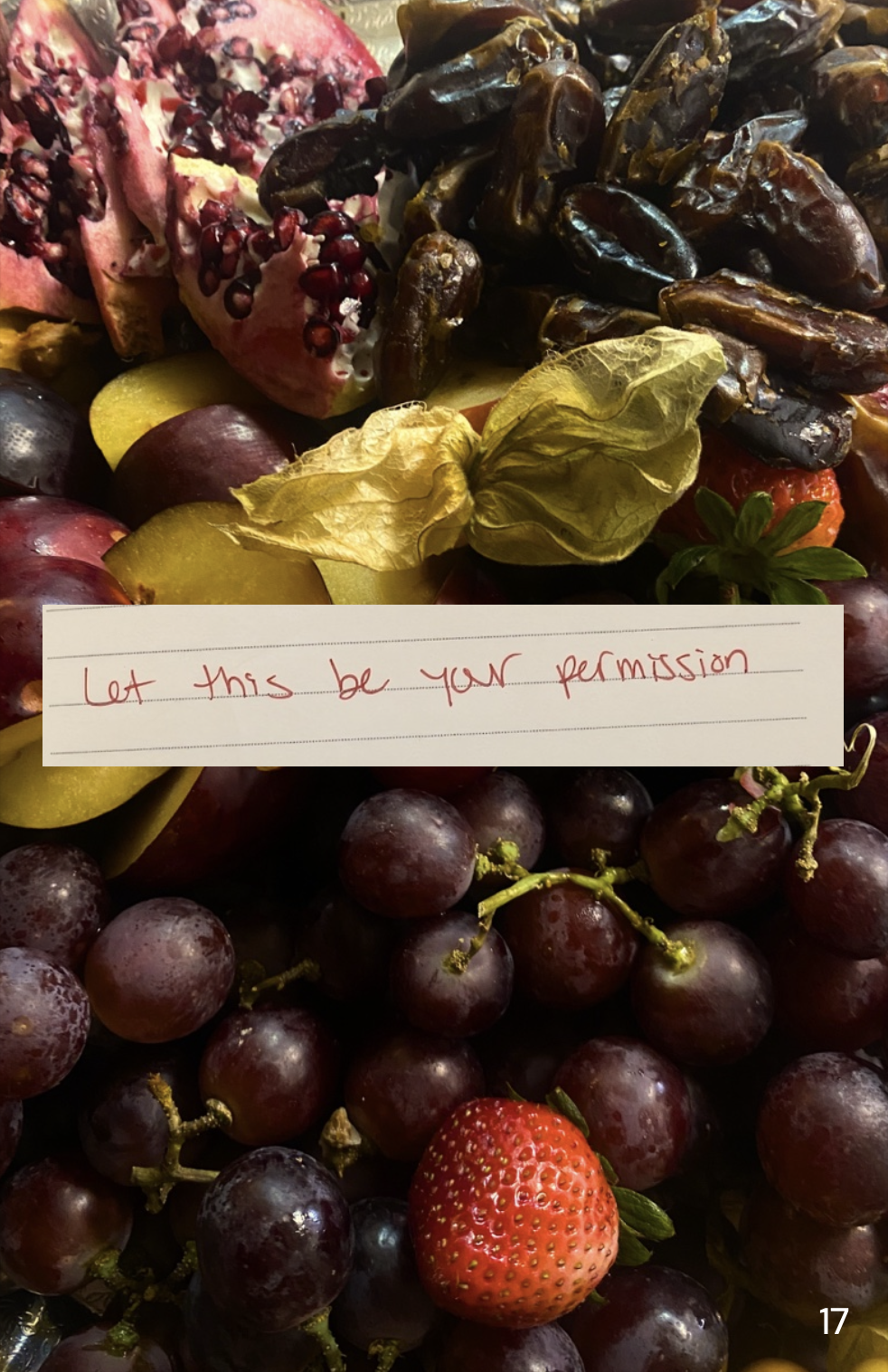
One participant spoke of the importance of giving one another “permission” to exist. That phrase has stayed with me. The zine is a record of the seminar, but it is also an experiment in what can happen when trans people gather to think, dream, make, and play together. It holds the traces of a collective practice that was experimental, generous, and oriented toward new possibilities for collaborative thought.
We were delighted to receive funding that made colour printing possible. Print copies of the zine will be available at Dick’s Lending Library and at the Institute for Gender, Sexuality, and Feminist Studies (IGSF). A free digital copy can also be downloaded here: https://drive.google.com/file/d/1JKLUI_2WisIc4dAvrb1y_XSgE-uLGi7z/view?usp=sharing
Dreaming Trans: Method, Sex, and the Unconscious and this collaborative zine were made possible through the generous support of the Institute for Gender, Sexuality, and Feminist Studies and the Sex in Theory Working Group at McGill University.