Cisteria!: A Psychoanalysis against Anti-Trans Panics
Announcing our Special Issue in Studies in Gender & Sexuality
I’m so pleased to announce the publication of Cisteria!, a special issue of Studies in Gender & Sexualitythat I co-edited with Jess A. Joseph and Tavi Bishop. The project began in early 2025, at a moment defined by intensifying anti-trans hostility, and we found ourselves turning to psychoanalysis as both an academic resource and a life raft—and as an authoritarian field we intended to upend!
In our introduction, Cisteria!: A Psychoanalysis against Anti-Trans Panics, we work with two central concepts: transpectres, the caricatures that haunt cultural and clinical imaginations of transness; and cisteria, which we describe as a series of “unfaithful recalibrations of the architecture of hysteria” that offer “an array of conceptual antidotes to anti-trans panic… approaches that do not follow a single trajectory, may contradict one another, slip across subjectivities, and traverse multiple social and political fields.” In this way, cisteria was meant to create discursive and imaginative space for confronting the onslaught of psychical and material violence that transgender people are consistently made to absorb.
The pieces gathered within the special issue are authored exclusively by trans contributors, forming a psychoanalytic conversation that is sorely needed within a field that excludes and peripheralizes trans voices and perspectives. They are clinicians, scholars, and artists whose work moves across a wide trajectory of mediums, including traditional academic essay, clinical narrative, theory, and creative interventions including poetry, music, crossword puzzles, visual art, and online gaming.
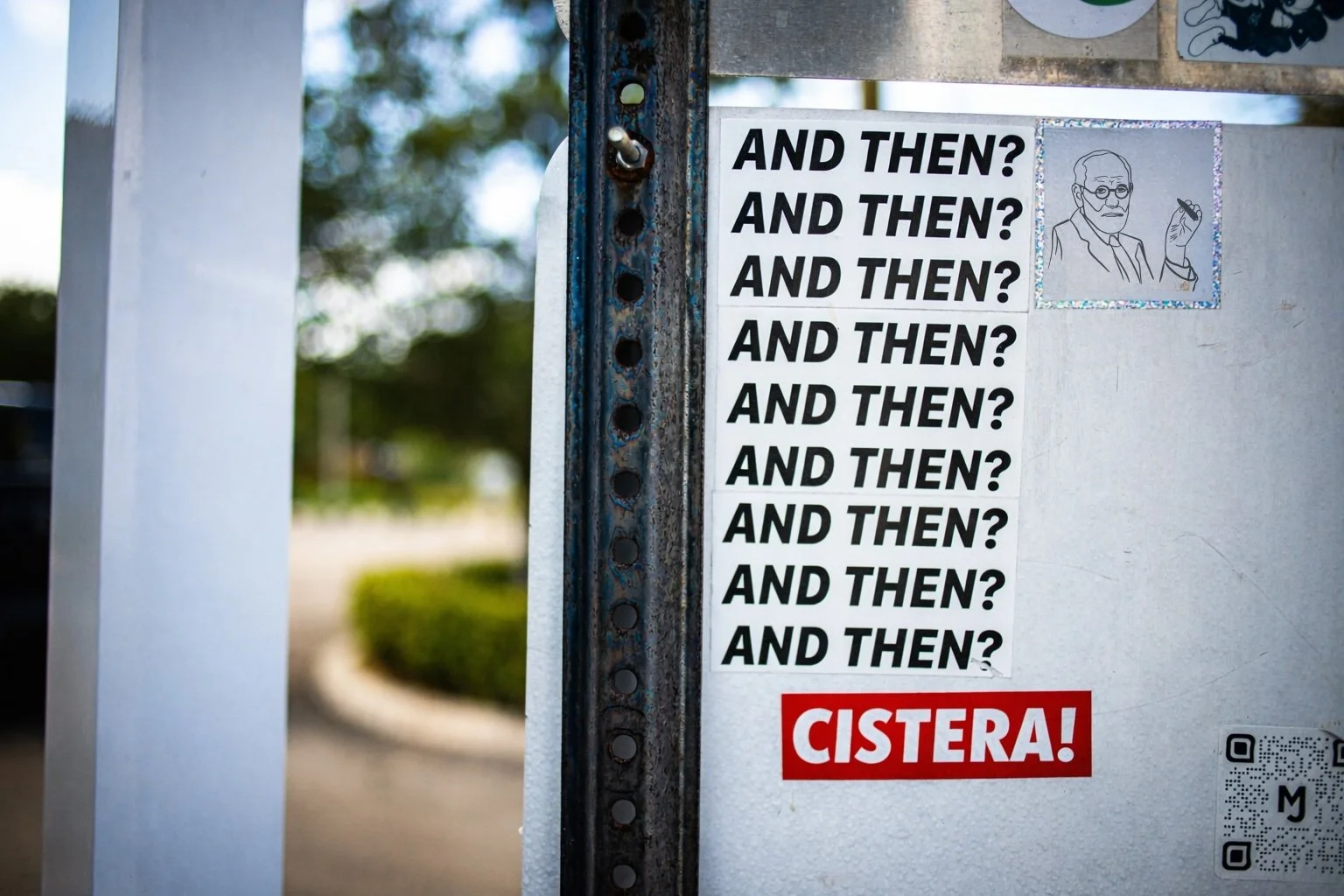
The issue includes: our introduction (“Cisteria!: Psychoanalysis against Anti-Trans Panic”); Jess A. Joseph’s collaged poster Wanted; Xiaomeng Qiao’s dreamplay game narrative in From Silence to Song; Myriam Sauer’s On the Trans Feminine Phallus; Sien Rivera’s They/Them! Pronouns and Unthinkable Anxieties; Red Samaniego and Evan Saunders’ playful crossword puzzle Trans By Association; Auran Heyd’s somatic exploration Vomiting Cis-teria; my own poetic piece from the analysand’s perspective, Transformative Cuntertransference; Vic J. Kennedy’s consideration of “pandemic as portal” in Masks Up, Mascs Down; Simone A. Medina Polo’s How I hacked my Gender and Music Using Psychoanalysis and Accelerationism; Reese Minshew’s clinical satire Fragment of an Analysis of a Case of Cisteria; and finally Tavi Bishop’s concluding poem Edging/Pending (Sex & Death).
Working on this special issue with Jess and Tavi evoked a trans-magical collaboration that I have needed over this past year - part theoretical, part playful experimentation, part irreverent queer laughter and eye rolling. As anti-trans rhetoric escalated in the world around us, our weekly meetings became a reminder of the importance of shared trans thinking and feeling—a spirit further carried by each contribution.
In the introduction, we describe this work as a form of trans threat psychoanalysis—a method that not only examines the supposed “threat” projected onto trans existence by the cis social order, but also refuses to relinquish transness (and psychoanalysis) as a genuine threat to the violent status quo. Rather than soothing these anxieties or proving trans innocence, we turn toward their unconscious dynamics, arguing that psychoanalysis belongs most powerfully in the hands of those whom the profession has long attempted to erase.
We close the introduction with the following invitation:
“We don’t know who you are, reader, but however you arrive, we’d like to invite you into our (trans) panic room, no code or special knock needed. Have a seat on one of our many repurposed analytic couches now occupied by people in conversation and sitting or standing queerly; people with respective beverages or snacks in hand or nearby; people down to think, feel, curse, create, grapple, question, cackle, muse, and dream transpsychoanalytically —together. We especially welcome our trans and gender-diverse siblings: please come in and join us, share space, and break bread. This time, for us, it is a joy not to hide, as we so often must, but to be found by you.”
If you’d like to explore the full issue, it’s now available through Studies in Gender & Sexuality. I’m deeply proud of what this collective has made, and I hope it opens new pathways for thinking and feeling within psychoanalysis, and beyond far it.